
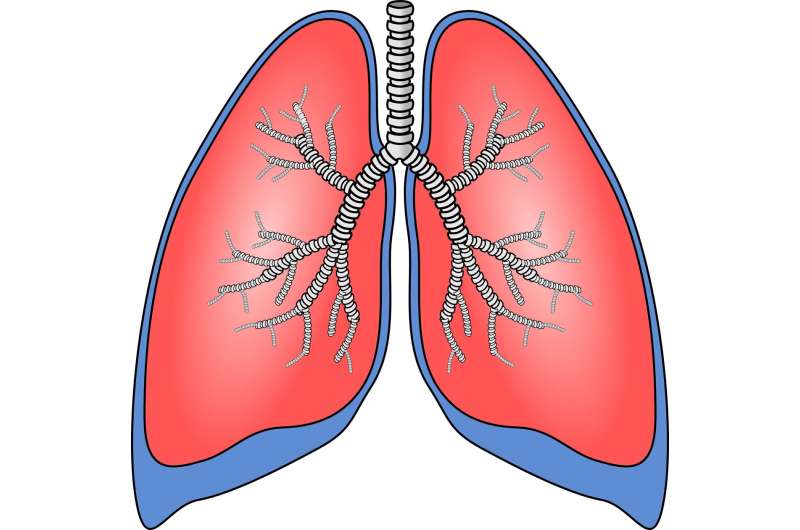
A new study led by researchers from the UCLA Health Jonsson Comprehensive Cancer Center shows that using high doses of radiation while integrating an ablative radiotherapy technique called stereotactic ablative radiotherapy (SABR) concurrently with chemotherapy is safe and effective in treating people with locally advanced non-small cell lung cancer that is not suitable for surgery.
Based on mid-treatment response, researchers found the combination treatment, which involves a second radiation plan to personalize a boost for the last third of radiation treatments, is a viable and promising option that helps reduce the risk of toxic side effects and having the cancer return within the chest.
The findings were published in the journal JAMA Oncology.
“This treatment method explores uncharted territory,” said Dr. Trudy Wu, a radiation oncology resident at UCLA and first author of the study. “Our field has been moving towards hypofractionation across many disease sites; however, it is particularly challenging in locally advanced lung cancer due to the close vicinity of tumor to sensitive structures such as the airways and esophagus.”
“This treatment is also typically delivered with chemotherapy which magnifies treatment-related toxicity. Using a novel adaptive boost technique personalized to an individual’s treatment response after the first two-thirds of radiation treatment allows for a tighter conformal radiation boost plan and reduction of healthy tissue receiving radiation.”
In the past, the prognosis for those with unresectable, locally advanced non-small cell lung cancer has been poor, with low survival rates despite treatment with a combination of chemotherapy and radiation. Current standard of care for this group of patients consists of 30 treatments spanning over six weeks, which can be logistically challenging for many patients.
While outcomes have improved with the help of modern treatment advances, like immunotherapy, a portion of patients still develop disease relapse in the chest.
One potential way to prevent cancer from returning within the chest after local therapy is to deliver radiation with a higher dose per single treatment in a more intense, or ablative, fashion.
To find the highest personalized boost dose that could be given safely in combination with chemotherapy, 28 patients at UCLA with stage II or III non-small cell lung cancer were enrolled between May 2011 and May 2018 on an early phase dose escalation trial.
All patients first received a base radiation dose of 4 Gy × 10 fractions followed by an adaptive SABR boost to target any remaining metabolically active cancer. The first 10 patients received a boost dose of 25 Gy (low, 5 Gy × 5 fractions). If this was deemed safe within a specified follow-up period, patients proceeded to receive a higher boost dose of 30 Gy (intermediate, 6 Gy × 5 fractions), followed by 35 Gy (high, 7 Gy × 5 fractions), all with concurrent weekly chemotherapy.
Along with determining the maximum tolerated dose of this novel and personalized approach, the researchers aimed to improve progression-free survival and shorten the overall duration of treatment for locally advanced non-small cell lung cancer.
by: University of California, Los Angeles
published on Medical Xpress